

Fall Planting Design & Installation Ideas
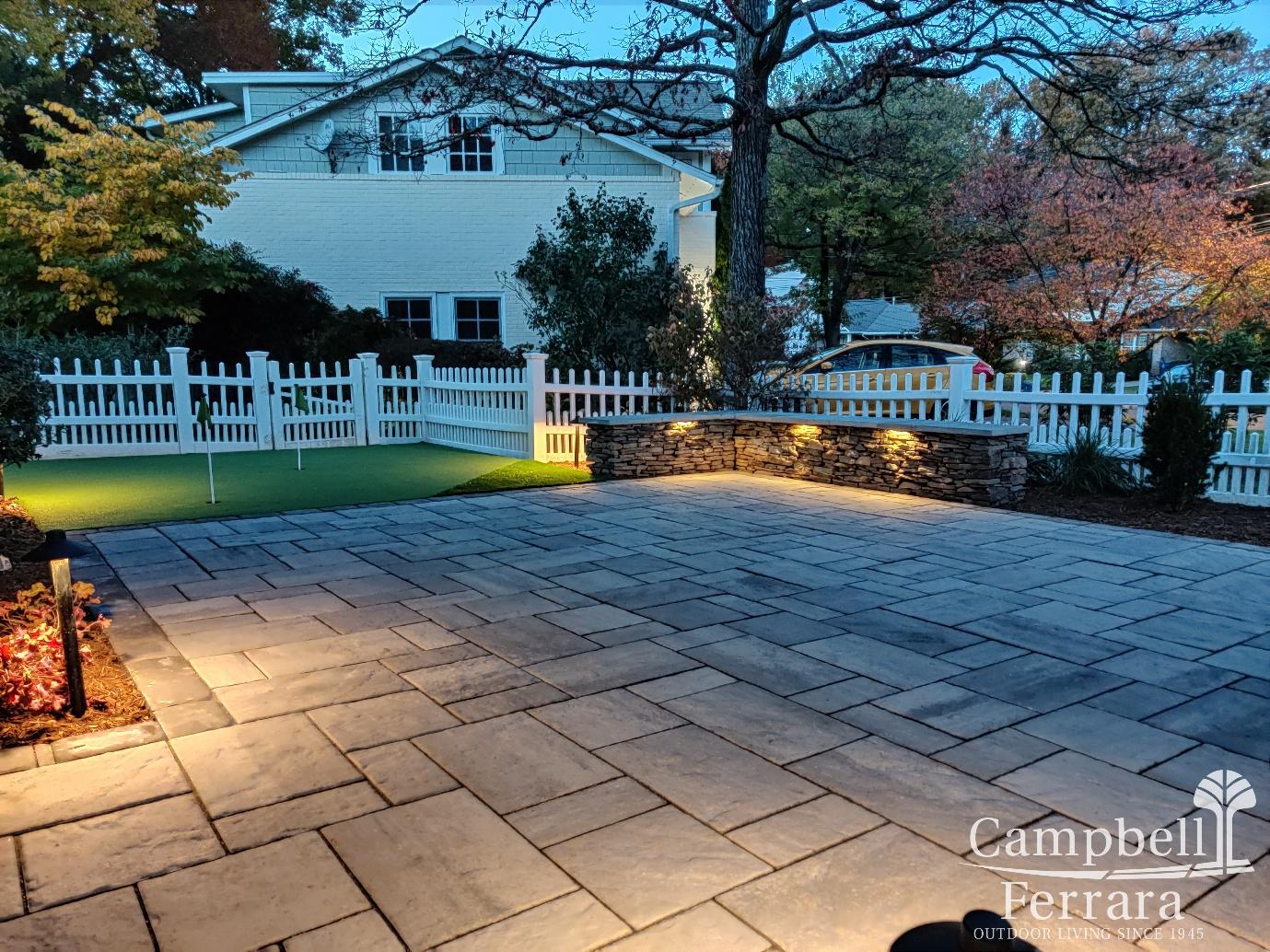
Outdoor landscape lighting transforms how your outdoor space looks and functions after dark. There are multiple fixture options for outdoor landscape lighting. It is critical to select the appropriate fixture to ensure your objectives are achieved. One area needs a clearly defined walking surface. Another needs a tree lit to showcase its structural beauty. A low wall may need enough light to show its edge and structural beauty without brightening the entire yard. Professionally designed landscape lighting starts by matching the fixture to the job.
That choice matters when improving the aesthetics, safety, and curb appeal of Northern Virginia homes, where walkways, mature plantings, steps, driveways, and patios often sit close together. A fixture that works well beside a path may be the wrong selection for a tall tree. A broad light aimed carelessly can create glare where a smaller fixture would have done the job better.
Campbell & Ferrara approaches lighting around how a property is used after sunset. For outdoor living, the goal is to make movement easier, highlight selected features, and keep the system practical to operate. Homeowners planning plant updates can also review our gardens and greenscapes services in Alexandria, VA.
The five LED fixture types below each solve a different problem. Choosing them with purpose helps outdoor living feel comfortable without competing glare and bright spots.
Up Lights: Focused Light from the Ground Up
An up light is placed at or near ground level and aimed upward. Its beam can reveal the trunk and branching of a mature tree, pick up texture on a masonry surface, or draw attention to a column near an entry. An expert landscaper can adjust the distance and angle based on the target’s height and width.
The fixture itself is usually meant to stay quiet visually. What matters is where the beam lands. Set too close, the light may create a hard, bright spot. Set too far away, it may spread into windows or areas that were never meant to be lit. Aiming matters as much as fixture selection.
Up lights are useful when a property already has a few features worth seeing after dark. One well-placed fixture on a tree near retaining walls can add depth without filling every corner with light. In an outdoor living environment, restraint often makes the result easier on the eyes.

Path Lights: Light Where Feet Actually Go
Path lights sit above grade and cast light toward the ground. Their fixture height, shade, spacing, and output determine how much of the walking surface is visible and how wide each pool of light becomes.
A row of fixtures does not need to march down both sides of a walkway. In many yards, thoughtful spacing is enough. A landscaper may position a fixture near a curve, a gate, a material change, or a point where a route meets one of the home’s patios.
Glare can ruin otherwise useful landscape lighting. A path fixture should direct light toward the ground rather than toward someone approaching from the other direction. Shielding helps keep the lamp itself from becoming the first thing people notice.
Flood Lights: Broad Coverage for Larger Targets
Flood lights spread illumination across a wider area than an up light or mini flood. In landscape lighting, that wider beam suits a large tree canopy, a broad planting area, a driveway edge, or a substantial wall surface.
Beam width can be useful, but it also makes careful aiming important. Too much output may flatten texture, spill toward a neighbor, or brighten areas that do not need attention. A landscaper can compare output, beam spread, mounting position, and target size before choosing the fixture.
Flood lights work best when they have one clear assignment. The fixture should cover the intended target without becoming the dominant feature after dark. That approach leaves room for smaller fixtures to handle movement and detail elsewhere.
Mini Flood Lights: Smaller Fixture, Tighter Assignment
A mini flood handles a similar task on a smaller scale. It gives landscape lighting a compact option near small planting beds, ornamental trees, columns, short wall sections, signs, or other features that do not need the reach of a full-size flood.
The smaller format gives a designer room to work around tight spaces. Near retaining walls, for example, a mini flood can be placed where a larger fixture would feel bulky or throw light too far beyond its target.
Mini floods also pair well with hardscape design when the intent is to reveal stone or brick texture in a limited area. Experienced hardscape experts can account for masonry edges, drainage routes, wire paths, and future maintenance access before final placement.

Under Cap Lights: Low Light Built into Walls and Steps
Under cap lights are installed beneath a cap, lip, or overhanging edge. Their light is directed downward across the surface below, so the fixture itself can remain mostly hidden.
They are often integrated into retaining walls, seat walls, or steps where a freestanding light would take up room or become visually distracting. Overhang, fixture spacing, and surface color all affect how the light appears once it reaches the wall or paving.
Because the source sits close to the surface, under cap lighting can provide useful definition without sending a beam across the yard. Around patios, that can be helpful when built edges already provide a natural place for the fixture.

How the Fixtures Work Together Around a Home
Knowing what each fixture does is only half of the planning. The next step is deciding where light is useful. A complete landscape lighting plan may use several fixture types, but each one should have a clear reason to be there.
The same property can need guidance at a front walk, clearer visibility at a set of steps, and accent light on one or two trees. Expertly designed landscape lighting addresses those needs separately rather than asking for one bright fixture to do it all.
Steps and Safety
Steps deserve careful attention because a small elevation change can be easy to miss at night. Key areas include the tread, the step edge, the landing, and the route leading to it. Under-cap lights can work well where the construction allows them, while nearby paths or mini flood fixtures can support the approach.
A landscaper should also look at existing porch, garage, and doorway lights before adding new fixtures. If a landing already receives enough light from the house, another bright source may create glare instead of improving visibility.
Where stairs meet retaining walls, lighting can help clarify the change in grade without turning the wall into a bright strip. People should be able to tell where the next step begins and where the walking surface ends.
Walkways and Everyday Movement
Walkway lighting works best when it follows how people move within the area. The front door, driveway, side gate, garden access, and routes between patios are usually a better guide than perfectly even fixture spacing.
A staggered path light layout can guide without creating a string of bright circles. Where a route bends or splits, placement can make the next direction easier to read. That is especially useful in a pet-friendly yard where people may head outside after dark several times a day.
Our team of experts also considers the surfaces and plants around the path. Pale paving may reflect light differently than dark stone, and plant growth can block a low fixture over time. These details can determine whether the system still works well a few seasons later.

Accenting Plants, Trees, and Hardscape Elements
Accent lighting needs a clear target. A mature tree, ornamental plant, stone column, or textured wall may be worth seeing after sunset. Good landscape lighting maintains enough contrast between lit and unlit areas for selected features to stay noticeable.
Up lights suit taller vertical subjects. Mini floods can handle smaller plant groups or compact masonry features. A standard flood makes sense when the target is broader. Under cap fixtures are better suited to edges that need low, directed illumination.
The same thinking applies near retaining walls and other built features. Hardscape design, stone color, wall texture, plant size, and nearby patios affect how the light reads. A knowledgeable landscaper will also allow for growth, since a shrub that is small today may redirect a beam later.
Patios, Seating Areas, and Time Spent Outside
A patio does not need to be bright from corner to corner to be usable. People need enough light to find steps, move between seating areas, and see the edges of walls or paths. Task lighting for cooking may come from the house or an outdoor kitchen rather than the same fixtures used around planting.
For outdoor entertainment, background lighting can make the space comfortable without putting a bright source next to every chair. An up light on a nearby tree, under-cap lighting along a seat wall, and modest path lighting at the exit route can each manage a different part of the evening.
This separation can also make an outdoor living environment feel calmer. Guests can see where they are going, while the yard still has darker areas and contrast enhancing the overall aesthetics. The system supports the space instead of competing with it.

Use a Programmable Timer to Control When the Lights Run
A programmable timer connects to the transformer and controls when the system turns on and off. Instead of relying on someone to remember to turn the lights on each evening, the schedule can handle routine operation.
For example, landscape lighting can come on around the time the household normally begins using outdoor areas and shut off later at night. You can adjust the schedule as daylight hours, or household routines change.
That control is useful for homeowners who want less unnecessary light after the yard is no longer in use. If you enjoy seeing the night sky from a window or one of your patios, an automatic shutoff time can keep the system from remaining on until morning.
The same approach gives homeowners an effortless way to reduce unnecessary overnight illumination during bird migration periods. The timer does not replace good fixture placement or careful aiming. It gives the system a reliable off time once the light is no longer serving a practical purpose.
A timer can also separate regular evening use from occasional outdoor entertainment. If guests stay later than usual, you can adjust the schedule as needed and return it to normal afterward.
Plan the System Around Real Use
A useful lighting plan does not require every fixture type. Some homes may need several path lights and only one up light. Others may rely on under-cap fixtures around walls and use a flood for one large tree.
The right mix depends on movement, grade, existing lights, planting, retaining walls, and how the family uses its outdoor areas. Our landscape experts can also account for wire routing, transformer location, fixture access, and how plant growth may affect light over time.
Campbell & Ferrara can help homeowners coordinate landscape lighting with walkways, plants, trees, patios, walls, and other exterior features so each fixture has a clear purpose. Whether you are stepping outside at night, welcoming guests or simply taking the dog out, the result will be a beautifully lit and useable outdoor space.
For help planning lighting for your Alexandria area property, contact us or call Campbell & Ferrara at (703) 354-6724.
Related posts


